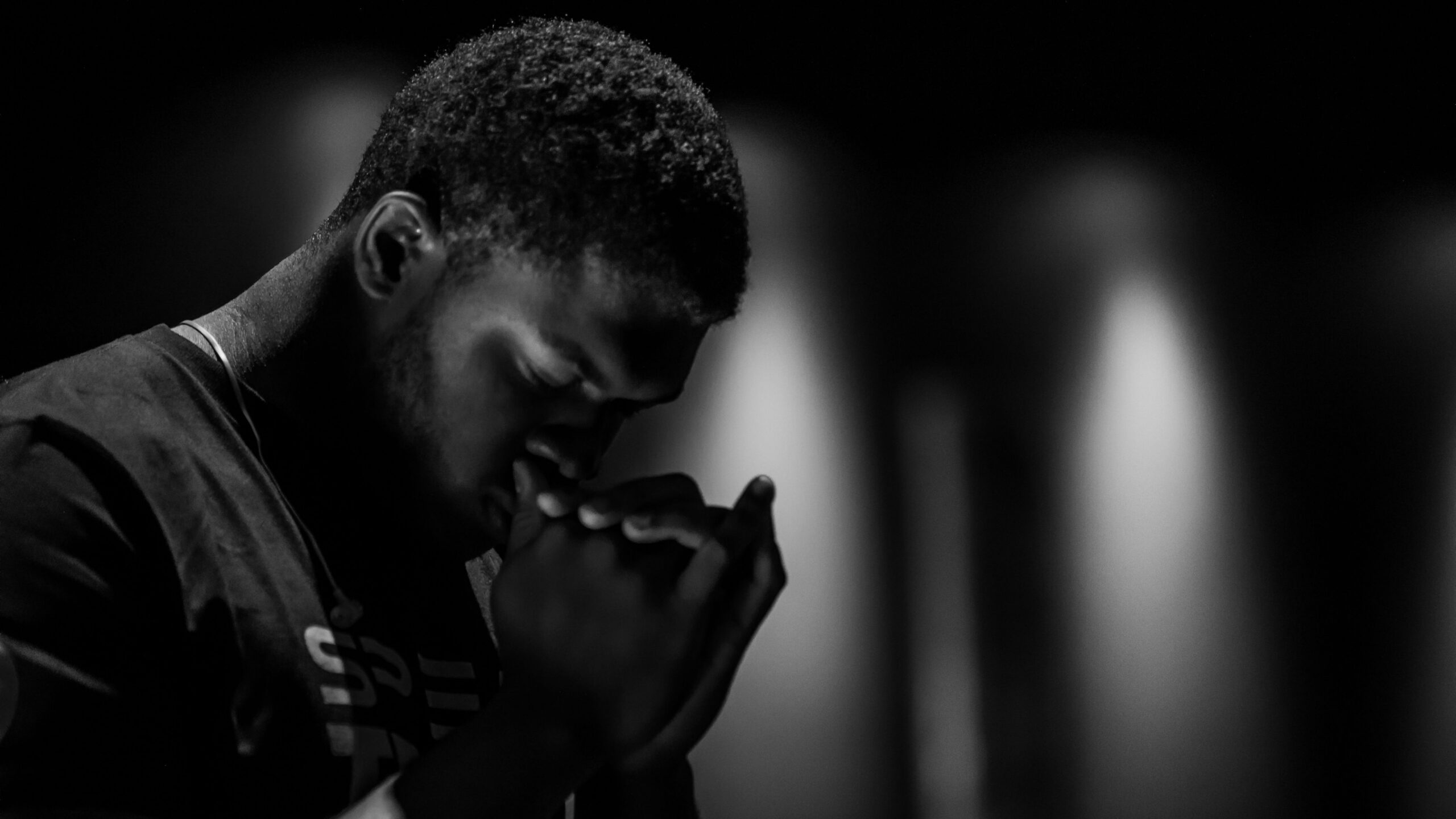

Have you ever stopped long enough to take a real look in the mirror—not just to check your hair or your outfit, but to examine what’s happening beneath the surface?
The truth is, most of us don’t like what we see when we go deeper. And instead of facing it, we often lie to ourselves.
Not to our bosses or spouses—not even our friends. We lie to ourselves the most.
“I’m fine.” (But we’re not.)
“I’ll change tomorrow.” (But we won’t.)
“It’s not that big of a deal.” (But it is.)
The prophet Jeremiah wasn’t exaggerating when he said:
“The human heart is the most deceitful of all things, and desperately wicked. Who really knows how bad it is?”
(Jeremiah 17:9)
That’s why surface-level change never lasts. You can build better habits, but if your heart remains unchecked, the root issue is never addressed.
What We’re Really Afraid Of
In Psalm 139, David invites God into the deepest parts of himself:
“Search me, O God, and know my heart; test me and know my anxious thoughts.
Point out anything in me that offends you, and lead me along the path of everlasting life.”
(Psalm 139:23–24)
This is a dangerous prayer—not because God is cruel, but because He is honest. He doesn’t just know the good about you—He knows the broken parts too.
Still, He stays.
Still, He loves.
Still, He leads.
The Power of a Diagnostic
Imagine you’re taking a road trip, and your check engine light comes on. Do you ignore it and hope for the best? Of course not. You run a diagnostic. You want to know what’s going on under the hood.
What if you did the same with your soul?
Some of us are running on fumes. We’ve got:
- Faulty brakes on self-control
- An overheating mind from stress
- An engine that’s lost the will to move forward
But instead of asking for help, we slap on a smile and pretend we’re fine. That’s self-deception.
David knew this firsthand. He lied to himself, ignored his responsibilities, chased temptation, abused power, and tried to cover up his sin. But when the prophet Nathan confronted him, everything changed.
David’s heart broke open. And from that place of honesty, he repented.
Psalm 51 is his confession:
“Create in me a clean heart, O God. Renew a right spirit within me.”
Why Self-Examination Matters
Looking in the mirror is painful. But if we don’t, we risk living a life of denial and disconnection.
Here are some signs we’re fooling ourselves:
- Others Have Told Us we have a problem—but we dismiss them.
- We Rationalize our behavior (“It’s not hurting anyone.”)
- We Get Defensive when anyone brings it up
Self-examination isn’t about guilt. It’s about grace.
When we invite God to search our hearts, He doesn’t shame us—He heals us.
And the best part? We’re not alone.
God walks with us. He knows every flaw and still chooses us. That’s the miracle of grace.
A Prayer for the Mirror
If you’re ready to stop pretending—ready to take that long look in the mirror—pray this:
“Search me, God. Know my heart.
Test me. Know my anxious thoughts.
Show me what I can’t see.
And lead me in the way everlasting.”
Sometimes, the greatest healing begins not with a solution, but with a moment of self-awareness. And sometimes, that moment starts with simply asking God to show you what needs to change.
If you want to change your life, change your habits.
If you want to change your habits, let God change your heart.
Take a long look in the mirror.
Let Him show you what He sees.
Let Him make it new.